Understanding AFib Episodes and What to Do When One Starts
Especially when they seem to come out of nowhere, atrial fibrillation (AFib) episodes can feel unsettling. The sensation of an episode is often described as a fluttering, racing heartbeat or something that just feels off, strange or unnerving. A piece of good news is that understanding what’s happening and knowing steps you can take can help you stay calm and in control even when an episode tries to shake you.
During an AFib episode, the top chambers of your heart (the atria) send out fast, irregular electrical signals. Instead of beating in a steady rhythm, they (the top chambers) quiver. This is what causes that rapid and/or irregular feeling. The inefficiency of this rhythm can often be the driving force behind additional symptoms such as shortness of breath, dizziness, fatigue, or chest discomfort.
Here is a link to an additional post that addresses what AFib is: https://wp.me/phhe41-3
Focusing on a discussion of episodes and steps to take, let’s start by getting familiar with a basic checklist that can help to provide an outline for the following text!
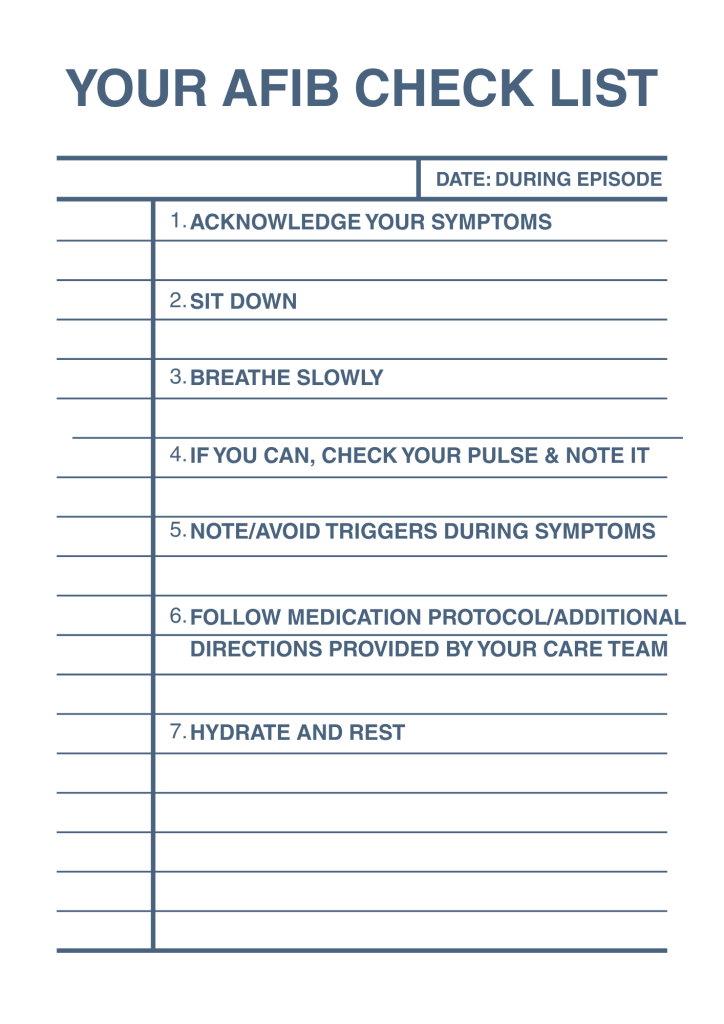
What To Do When an Episode Starts?
The moment you notice symptoms, think of it as your cue to take a beat, slow down and check in with what you are feeling.
Sit down and breathe slowly.
Panic and additional stress can boost your heart rate even higher and create a snowball effect. Find a safe comfortable place to sit and take deep, steady breaths to soothe your body.
Next, check your pulse if you can.
You don’t need exact numbers. Simply noticing whether your heartbeat feels irregular or unusually fast can help you track patterns over time. This is also where a wearable can come in handy. Something such as an Apple Watch can help give you and your care team a general sense and keep track of trends.
Avoid known triggers.
Steering clear of common triggers such as dehydration, alcohol, caffeine, etc. can help you avoid exacerbating symptoms. So, if you are aware of certain things that tend to set off episodes, avoiding them while experiencing symptoms is a very good plan!
Take prescribed medications and/or follow any specific protocols provided by your doctor.
Patients are often prescribed “pill‑in‑the‑pocket” i.e. something to take during episodes: your doctor may direct you to take rhythm medications or rate‑control drugs to use during episodes. Follow your doctor’s instructions carefully!
Hydrate and rest.
Hydration and rest can seriously help to support the resolution of episodes and ease symptoms. Take care of your body, give it grace and comfort.
When to Seek Emergency Care:
The following are some examples of when you should call 911 or go to the emergency room.
- Chest pain
- Severe shortness of breath
- Fainting or near‑fainting
- A very fast heart rate that doesn’t slow down
- Symptoms that last longer than usual or feel different than past episodes
Listening to these types of signs is important and can help keep you safe!
After the Episode
Even if your symptoms settle and resolve, let your healthcare team know about your experience and the episode. Tracking patterns, symptoms and changes can help your care team evaluate and or adjust treatment plans.
Final Thoughts
Worries and concerns are absolutely normal but AFib doesn’t have to take over your life. The more you understand your episodes, have a protocol and check list prepared and respond calmly, the more confident and at ease you will feel. The right steps and close communication with your doctor/care team are integral parts of managing episodes safely in a way that minimizes stress.
References
American Heart Association. (2024). Atrial fibrillation (AFib). https://www.heart.org
Mayo Clinic. (2024). Atrial fibrillation. https://www.mayoclinic.org
National Heart, Lung, and Blood Institute. (2024). What is atrial fibrillation? https://www.nhlbi.nih.gov
 ccadorette56c776821a-rjgmi
Leave a comment