Everyday Habits That Help You Live Well With AFib
Atrial fibrillation can sometimes feel overwhelming but living with it doesn’t have to be!
Yes, medications and procedures play important roles, but your everyday habits can make additional, meaningful differences in reducing symptoms, preventing episodes, and supporting your long‑term heart health.
First, here is a visualization to get us started! Take a peak at and get acquainted with some key everyday habits!
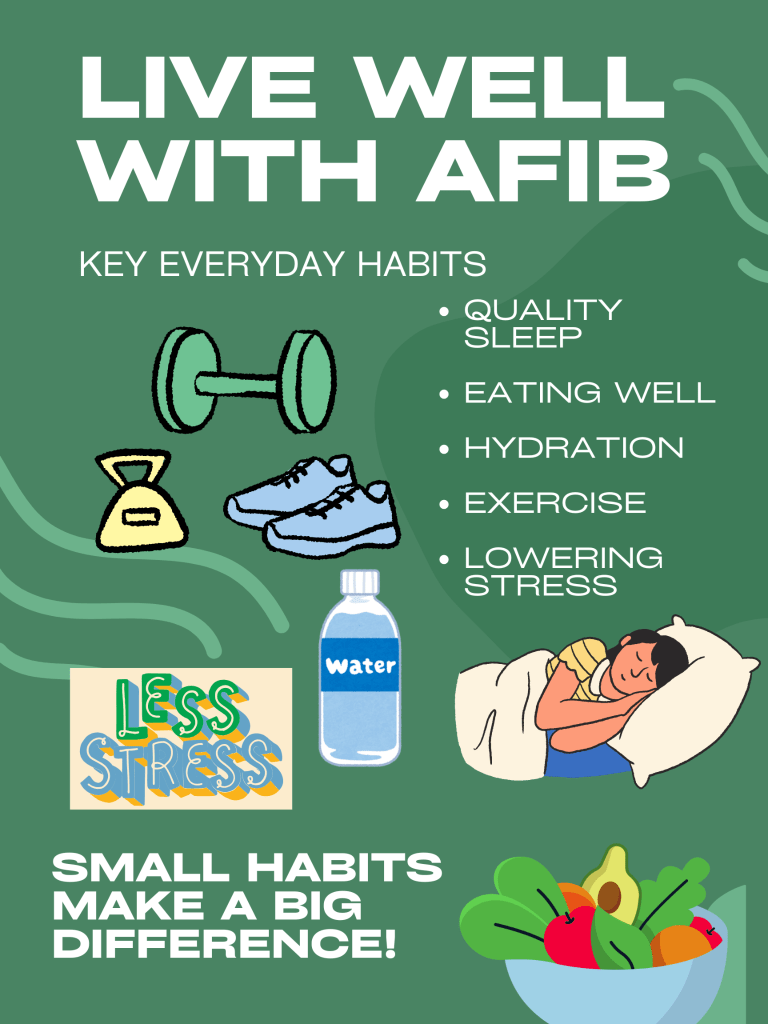
Now let’s dive a bit deeper!
Sleep, Hydration & Stress Management
Good, quality sleep is one of the strongest lifestyle protectors against AFib. Conditions such as sleep apnea (a condition where a person’s breathing repeatedly pauses throughout the night) can trigger irregular rhythms—evaluation is important if you snore loudly or feel overly tired. Aiming for 7–9 hours of consistent sleep and avoiding factors such as late night screentime or heavy meals before bed that negatively impact natural sleep rhythms is a great place to focus.
Hydration is very important! Particularly in warm weather or during exercise, even mild dehydration can increase palpitations. Sipping on water throughout the day can help keep palpitations at bay!
Stress is a common and well-known AFib trigger. Employing and practicing simple techniques such as meditation, deep breathing and gentle yoga can make a large difference when it comes to stress management and calming your nervous system. A calm nervous system can help reduce stress related episodes.
Exercise Guidelines & Safe Activity Levels
“Can I still exercise?” is a FAQ (frequently asked question) by patients. The short answer is yes. Regular movement is crucial in reducing AFib burden, improving overall heart function, managing weight, promoting overall health and wellbeing etc. 150 minutes of moderate aerobic activity and 2 days of muscle strengthening per week is the recommended guideline but every little bit counts whether it’s parking farther away, taking the stairs, whatever!
A few quick safety reminders:
- If your heart feels irregular or suddenly races, pause and take note.
- Discuss appropriate level and intensity with your care team.
- Build up gradually.
Alcohol & Caffeine
Alcohol is a major culprit when it comes to triggering AFib. Even small amounts can provoke episodes in sensitive individuals. Many cardiologists recommend significantly limiting intake and some patients feel it best to avoid it entirely.
Caffeine is arguably a bit more individualized. Research shows that moderate coffee intake is generally safe for most people with AFib, but paying close attention to your own sensitivity is key! Energy drinks tend to be more likely to trigger symptoms due to high stimulant levels.
Using Wearables
Smartwatches (such as an Apple Watch), heart‑rate monitors and other wearables can be helpful tools. This being said they are only beneficial if they reduce worry rather than increase it! Using them to track trends rather than for minute to minute monitoring tends to be the way to go. If you do choose to utilize one of these tools and your device flags an irregular rhythm, a solid practice is to note the time, symptoms, and activity (what you were doing), and then share the information with your clinician.
When Should I Call My Doctor?
It is important to seek medical attention if you experience things such as chest pain, severe shortness of breath, fainting, or a fast, sustained heart rate. Mild, familiar symptoms that resolve quickly can usually be monitored at home, but keep a log to review at your next appointment—your care team will be the best resource to give you parameters for understanding what these manageable symptoms are.
References
Centers for Disease Control and Prevention. (2024). Atrial fibrillation (AFib). https://www.cdc.gov/heartdisease/atrial_fibrillation.htm
Hamad A. K. S. (2024). Caffeine and Arrhythmias: A Critical Analysis of Cardiovascular Responses and Arrhythmia Susceptibility. Journal of the Saudi Heart Association, 36(4), 335–348. https://doi.org/10.37616/2212-5043.1402
Hindricks, G., Potpara, T., Dagres, N., Arbelo, E., Bax, J. J., Blomström‑Lundqvist, C., … Watkins, C. L. (2021). 2020 ESC Guidelines for the diagnosis and management of atrial fibrillation. European Heart Journal, 42(5), 373–498.
Voskoboinik, A., Prabhu, S., Ling, L.‑H., Kalman, J. M., & Kistler, P. M. (2016). Alcohol and atrial fibrillation: A sobering review. Journal of the American College of Cardiology, 68(23), 2567–2576.
 ccadorette56c776821a-rjgmi
Leave a comment