Understanding Your AFib Treatment Plan
First, an AFib (atrial fibrillation) diagnosis can bring feelings of worry, confusion, fear etc. and all of which are natural, normal and valid. In addition, it can also raise a lot of questions. A big one being: what could treatment look like?
AFib treatment is highly personalized, and it is important and comforting to note that most people do very well once they understand their options. A simple way to point out the major parts of AFib treatment is to break it down into three pieces: rate control (controlling your heart rate), rhythm control (restoring normal heart rhythm), and preventing stroke. Your doctor will consider many factors and help guide you to an approach that encompasses these goals and fits your symptoms, lifestyle, and long‑term goals.
Rate Control: Slowing the Heart Down
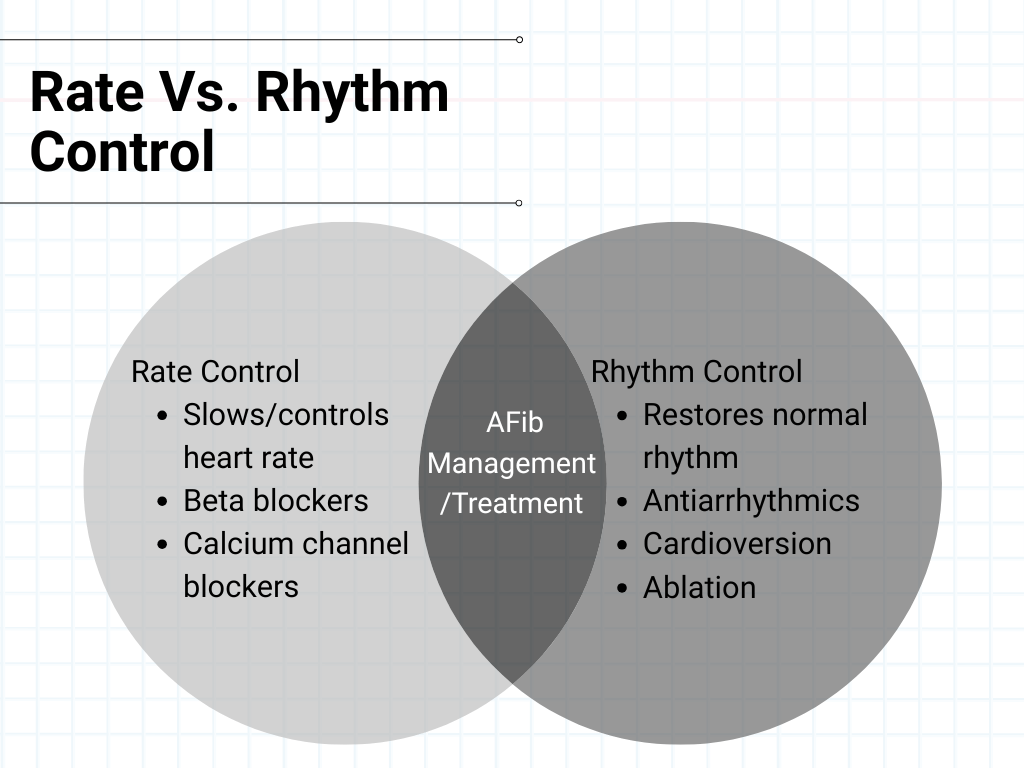
A key distinction to make is that while rate control is important and often at the top of the list, this is not an approach that aims to fix the irregular rhythm itself. Instead, it works to slow and manage the fast, erratic nature of AFib. This treatment is in the form of medications like beta blockers and calcium channel blockers that help prevent the heart from racing (beating very fast). When successful, this treatment often helps to reduce symptoms like fatigue, shortness of breath, or feelings of the heart “pounding” or “fluttering”. It is very common for patients with AFib to feel significantly better once their heart rate is under control.
Rhythm Control: Restoring a Normal Beat
On the flip side, the goal of rhythm control is different. This is the type of treatment that aims to get your heart back into a normal rhythm. This can be done via medications called antiarrhythmics, or through procedures such as electrical cardioversion, which briefly “resets” the heart. Another option is catheter ablation, a minimally invasive procedure that targets the areas of the heart responsible for triggering AFib. Not everyone needs an ablation, but particularly if other options are not sufficient it can be a very effective choice to resolve symptoms.
Oftentimes having a clear visual distinction between the two can help minimize complication and overwhelm. So with this in mind here is a graphic (below) that helps to isolate and visualize rate vs. rhythm control.
Stroke Prevention: Managing Risk
AFib increases the risk of stroke. Stroke is undoubtedly a scary possibility, managing risk is crucial which is why stroke prevention is a key pillar of treatment.
Here is a link to a separate post regarding AFib and stroke risk: https://afibmadesimple.com/2026/06/14/lets-talk-about-atrial-fibrillation-and-stroke-risk/
Many people with AFib take blood thinners to reduce clot risk and your doctor may recommend varying degrees of preventative treatment depending on your overall risk factors. Protecting against stroke is one of the most important parts of AFib care and is highly individualized.
Team Effort
You and your physician are a team and AFib treatment is most successful when you and your doctor make decisions together. Shared decision‑making means talking openly and combining medical expertise from your care team with your own goals, concerns etc. The best plan is the one that keeps you safe, helps you feel better and fits your life.
References
American Heart Association. (n.d.). AFib treatment options. https://www.heart.org/en/health-topics/atrial-fibrillation/treatment-and-prevention-of-atrial-fibrillation/afib-treatment-options


Leave a Reply